With a background spanning electrical engineering and applied mathematics, Spyridon brings a unique analytical perspective to PolyEigen. Prior to founding PolyEigen, Spyridon served as an Independent Portfolio Manager (IPM) at WorldQuant for over 15 years, where he ran the longest-standing independent global market-neutral equity book in the firm’s history. His strategies blended statistical, fundamental, and macroeconomic alphas. Earlier in his career, he held senior roles at Deutsche Bank, where he led quantitative research and model development. He also spent time at Tudor Investment Corporation, where he managed key technology initiatives across risk and trading. Spyridon holds a PhD in Electrical Engineering from Dartmouth College, an MS in Electrical Engineering from Yale University, and a BS in Computer Science from the University of Crete, Greece.
Isaak brings over a decade of world class experience in quantitative finance and academic research to PolyEigen.
Prior to founding PolyEigen, Isaak was a Portfolio Manager at WorldQuant; he contributed to risk assessment, portfolio optimization, and strategy development for Spyridon. Over his ten-year tenure, he created and refined global trading alphas using machine learning and adaptive algorithms. Earlier, Isaak earned his PhD in Mathematics from SUNY Albany, where he also lectured and received a patent for his work on image reconstruction in scanning electron microscopy.
He earned his MS in Mathematics from SUNY Albany and his MSc and BSc in Pure Mathematics from Aristotle University of Thessaloniki in Greece.
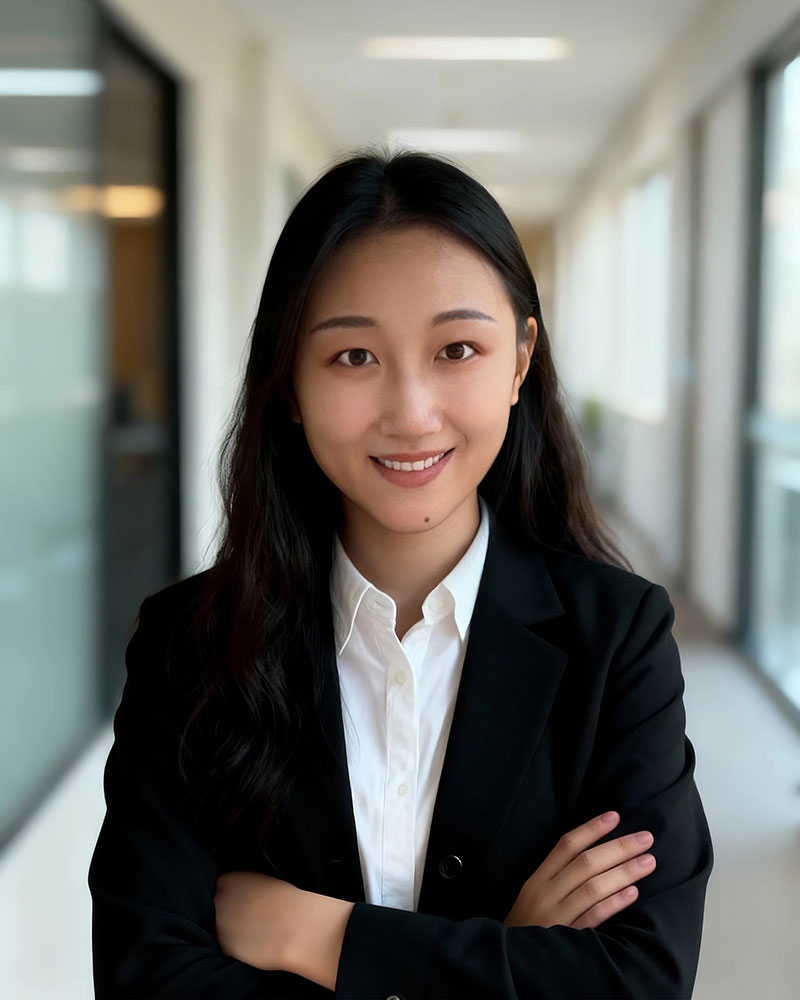
Jing brings a rare combination of deep scientific rigor and market insight to her work. With a PhD in Physics from the University of Chicago, she is adept at uncovering patterns in complex data and transforming them into actionable investment ideas. Prior to founding PolyEigen, Jing spent over eight years as a Vice President and Quantitative Researcher at WorldQuant on Spyridon’s IPM team. She developed mid-frequency and intraday trading alphas, applying a mix of traditional statistics and modern machine learning. Earlier in her career, she performed data analysis and modeling for the DAMIC (Dark Matter Detection in CCDs) dark matter experiment and presented at six international conferences. Jing earned her PhD in Physics from the University of Chicago and her BS in Physics and Finance from the University of Science and Technology of China.